
Netflix’s Second-Season Problem: Why Even Its Biggest Shows Are Losing Millions of Viewers
Netflix remains the world’s leading streaming platform, but a growing trend is raising concerns among investors and industry analysts: many of its biggest original series are failing to retain audiences beyond their debut season.
Recent viewership data suggests that even blockbuster Netflix originals are experiencing significant audience declines in their second and subsequent seasons. While the company continues to dominate streaming, slowing engagement and a shortage of breakout hits in 2026 have intensified questions about Netflix’s long-term growth strategy.

Netflix’s Biggest Shows Are Losing Viewers
According to Netflix’s own viewing figures covering each show’s first four weeks after release, several of its flagship series have suffered steep audience declines.
Among the most notable examples:
- One Piece lost more than 30% of its audience between Seasons 1 and 2 despite becoming one of Netflix’s biggest hits of 2023.
- Beef Season 2 recorded a dramatic decline of over 70% compared with its debut season.
- The Night Agent fell approximately 50% in Season 2 before dropping another 35% in Season 3.
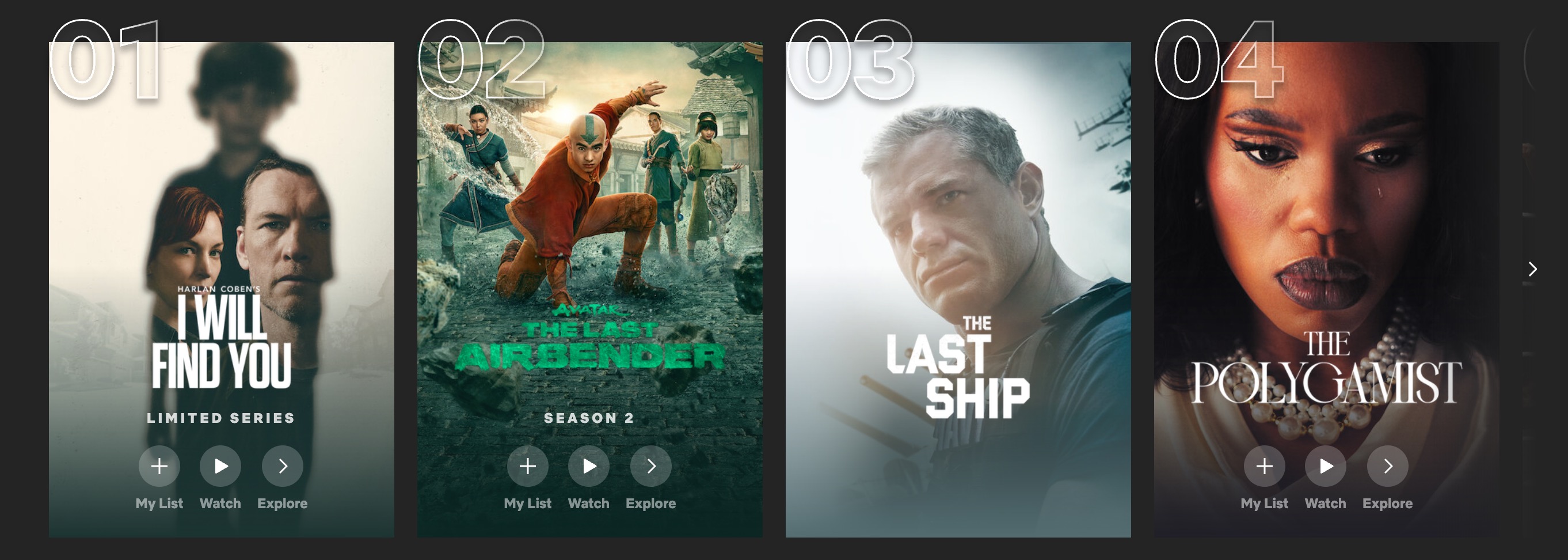
- Avatar: The Last Airbender, one of Netflix’s strongest performers in 2024, saw viewership plunge by more than 60% during the first week of its latest season, an early sign that it may struggle to match previous success.
Historically, Netflix originals have attracted their largest audiences during their first season. Unlike traditional broadcast television, where popular shows often grew through word of mouth over several years, streaming series frequently peak immediately before gradually losing momentum.
The scale of these declines has reportedly become a major internal concern as Netflix analyzes audience behavior to understand why viewers are abandoning returning series.
Netflix Is Ending Some Popular Series Despite Renewals
The changing viewing trends are already influencing Netflix’s programming decisions.
The company has confirmed that The Night Agent will conclude after its upcoming season. Meanwhile, comedies such as Running Point and The Four Seasons received renewals despite each reportedly losing more than half of their original audience.
These decisions highlight the difficult balance Netflix faces between maintaining popular franchises and managing rising production costs for shows that no longer deliver the same engagement.
Why Investor Concerns Are Growing
Audience retention has become one of the most important metrics for Netflix.
Although the platform continues adding subscribers, total viewing time reportedly increased by less than 2% last year. Investors increasingly view engagement—not subscriber growth alone—as the key indicator of Netflix’s future performance.
This slowdown has contributed to pressure on Netflix’s stock price, with investors questioning whether the company can continue producing enough hit content to justify its premium valuation.
A Surprisingly Quiet 2026 for Netflix Originals
Netflix typically relies on a steady stream of blockbuster releases throughout the year.
However, during the first five months of 2026, only two productions emerged as genuine breakout successes:
- His & Hers
- Bridgerton Season 4
Notably, Bridgerton became one of the few major Netflix franchises to avoid the widespread second-season decline affecting many competitors.
Following Bridgerton’s release, Netflix went nearly four months without another major scripted hit.
Shows expected to anchor the platform—including One Piece and Beef—underperformed relative to expectations. During April and May, one of Netflix’s strongest-performing releases was The Roast of Kevin Hart, illustrating an unusually weak period for scripted programming.
The Warner Bros. Discovery Bid Raised More Questions
Netflix also faced scrutiny after making an unexpected bid to acquire Warner Bros. Discovery.
Co-CEOs Ted Sarandos and Greg Peters described the opportunity as a rare chance to acquire valuable entertainment assets. However, many investors interpreted the move differently.
For years, Netflix built its business through original programming rather than acquisitions. The bid led some shareholders to question whether the company was running out of internal growth opportunities.
Netflix ultimately withdrew after the asking price became too high, avoiding what could have become an expensive bidding war. Although investors initially welcomed the decision, concerns resurfaced following the company’s latest earnings guidance, which fell short of market expectations.
Third-party estimates also suggest Netflix’s subscriber growth has slowed in the United States, even though the company no longer publicly reports subscriber numbers.
Engagement Has Become Netflix’s Biggest Challenge
Netflix’s long-term strategy depends on viewers spending more time on its platform.
While Netflix’s share of total television viewing in the United States continues to grow, competitors such as YouTube and Roku have expanded even faster in recent years.
Despite releasing major global hits including the final seasons of Squid Game and Stranger Things, Netflix did not experience a corresponding surge in overall viewing hours.
This suggests that while new users continue joining the service—partly due to its password-sharing crackdown—the average subscriber may actually be watching less content.
To counter slowing engagement, Netflix has expanded beyond traditional scripted programming by investing in:
- Live sports
- Podcasts
- International partnerships
- Local-language productions
- Event programming
The goal is to encourage subscribers to spend more time within the Netflix ecosystem rather than turning to competing streaming services.
Netflix Still Leads Streaming Despite the Challenges
Despite current concerns, writing off Netflix would be premature.
The company still accounts for roughly half of streaming’s most-watched original shows, outperforming rivals including Paramount+, Max, Amazon Prime Video, and Peacock.
Netflix has also weathered programming slowdowns before, often recovering with unexpected breakout successes.
A recent example is I Will Find You, the adaptation of a Harlan Coben novel, which has attracted nearly 60 million views within just a few weeks of release. As a limited series, it avoids the audience-retention challenge associated with multi-season productions.
Outlook: Can Netflix Reverse the Second-Season Curse?
Netflix’s ability to retain viewers beyond a show’s debut season may become one of the company’s defining challenges over the next several years.
Subscriber growth alone is no longer enough to satisfy investors. Sustained engagement, repeat viewing, and long-lasting franchises will increasingly determine whether Netflix can maintain its leadership in an increasingly competitive streaming market.
While the company continues to dominate global streaming, reversing its second-season audience declines could prove critical to its next phase of growth.


Leave a Reply
Want to join the discussion?Feel free to contribute!